


Reported improvements
in overall hair coverage*
The first step
Complete a short online assessment to help shape your hair loss program and long-term hair goals.
Doctor review
A doctor will review suitability with you and determine your treatment options. A pharmacist will call prior to dispatch.
Ongoing care
All patients receive unlimited telehealth consultations to review progress over time and refine treatment.
Long-term progress takes commitment and consistency
Hair loss doesn’t usually happen overnight, and neither does managing it. That’s why treatment should be reviewed over time rather than set once and forgotten.
Our Australian doctors review your progress regularly and, where appropriate, adjust your treatment to reflect your individual response and changing needs.
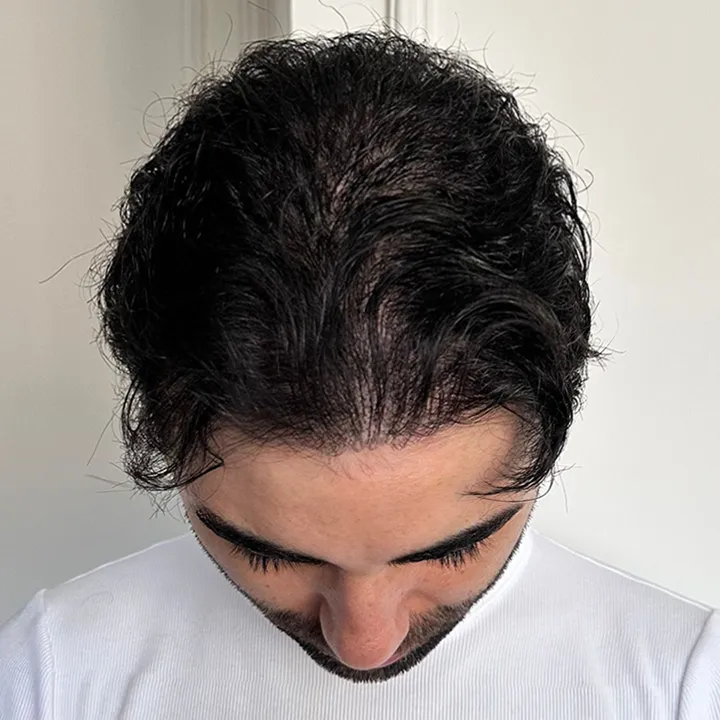
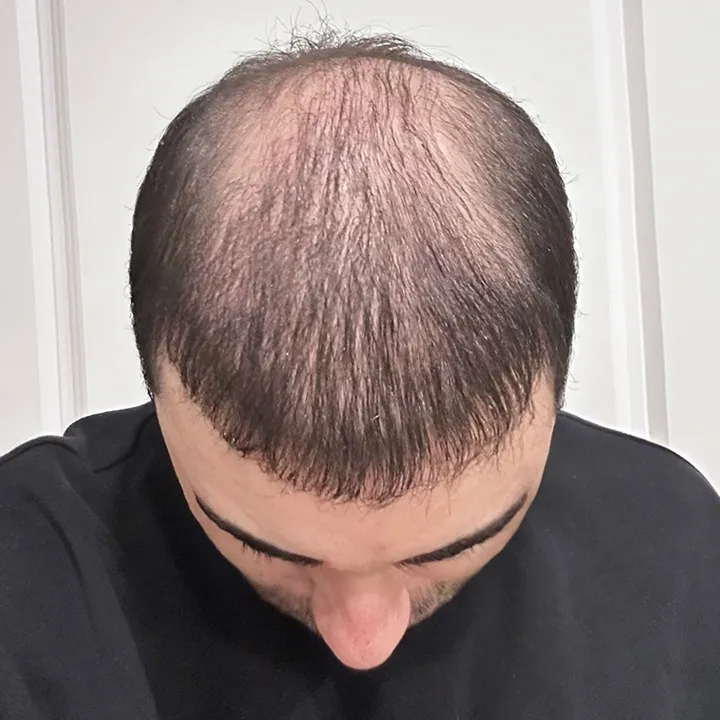



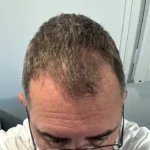

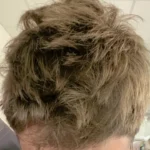
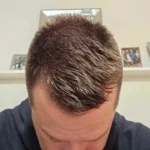


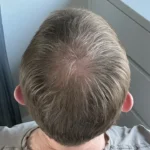


Images shown reflect individual patients on The Hairy Pill treatment program. Individual responses and outcomes vary.
Images shown reflect individual patients on The Hairy Pill® treatment program. Individual responses and outcomes vary.
Understanding the different options for managing men’s hair loss
Oral treatments are among the most widely used medical approaches for managing male hair loss.
These approaches may include active ingredients designed to target key factors associated with hair loss, including DHT activity and the hair growth cycle, helping support hair retention and healthier hair growth over time.
For many men, oral treatment offers a convenient, non-invasive approach to ongoing hair management, particularly when combined with ongoing medical oversight and personalised refinement over time.
Hair transplants are a surgical option commonly used in men experiencing more advanced hair loss or thinning.
The procedure involves relocating healthy hair follicles from one area of the scalp to another, typically to improve hair density or restore the appearance of the hairline.
While hair transplants can deliver long-term cosmetic results, they do not directly address the underlying root causes of hair loss, meaning ongoing hair management may still be considered over time depending on the individual.
Platelet-rich plasma (PRP) therapy is a treatment that involves injecting concentrated platelets from a patient’s own blood into the scalp to support hair follicle activity.
Some studies suggest PRP may help improve hair density and thickness in certain individuals, particularly when used alongside broader hair management approaches.
While PRP continues to be explored in hair loss treatment, long-term outcomes and consistency of results can vary, and further research is still ongoing.
Topical treatments for male hair loss, such as minoxidil, are among the most commonly used approaches for managing hair thinning and balding.
These approaches work by improving blood flow to the hair follicles, which may help support healthier hair growth over time.
However, topical approaches generally require consistent long-term application and can take several months before noticeable changes occur.
Hair loss shampoos can offer a mild improvement in the appearance of hair and may help with the health of existing strands, but they are not a complete solution for hair loss, especially when the cause is genetic.
While some shampoos may temporarily thicken the hair or reduce shedding, they don’t address the root causes of male pattern baldness, such as hormonal imbalances or hereditary factors.
Vitamins and supplements may help support hair health, particularly where nutritional deficiencies are present.
Nutrients such as iron, zinc and biotin play an important role in normal hair growth, and correcting a deficiency may help improve hair quality or reduce shedding in some individuals.
However, supplements alone are generally unlikely to reverse male pattern baldness, as genetic hair loss is primarily influenced by hormonal and genetic factors rather than isolated nutritional deficiencies.
Natural methods and home remedies are commonly explored by men experiencing hair thinning or balding, however many lack strong scientific evidence in the context of genetic hair loss.
While some approaches may support general scalp or hair condition, they are generally unlikely to address the underlying causes of progressive male hair loss on their own.

The Hairy Pill® for Men
$75 per month subscription
Service includes

Side Effect Protect®
All treatments can carry risks and side effects. If adjustments are needed, partner doctors can refine treatment strength, dosage or ingredient combinations throughout the process at no additional charge.


A straightforward approach to treating hair loss in men.
The Hairy Pill® is a once-daily treatment designed to address male hair loss and support healthy hair growth.*
It’s 100% online, with doctor consultations by phone and treatment dispatched directly from an Australian pharmacy to your door. Simple, discreet and designed to fit into your routine.
Developed by world-renowned dermatologist Professor Rodney Sinclair, our approach draws on close to 40 years of clinical experience treating hair loss.
*Individual results may vary.
One pill a day. A treatment plan built around you.
Our doctors will talk you through your treatment options. Treatment may contain pharmaceutical-grade active ingredients.
- Personalised treatment: Our doctors consider your hair loss, medical history and needs when determining your treatment.
- One pill a day: One simple step in your daily routine, no long processes or multiple products.
- Ongoing reviews: Your treatment can be reviewed and adjusted where appropriate as your needs change.
- Unlimited doctor consultations: Speak with one of our doctors whenever you need additional clinical support.
Results take time. Consistency counts.
Hair grows gradually, so results take time. Results generally show within 3–6 months. Regular doctor reviews assess progress and guide treatment over time.
- 0–3 months: Early changes may include reduced hair loss or the first signs of new growth.
- 3–6 months: Progress may become more noticeable, including less shedding, new hair growth and increased thickness.
- 6–12 months: Hair may continue to appear thicker, fuller and stronger as progress develops over time.
Individual results may vary.
Not sure where to start?


Featured in Australia’s trusted media outlets











Men’s hair loss, hair growth and hair health support reimagined into a once daily routine.

A closer look at the hair growth cycle and how it affects men.
Hair grows in cycles, moving through active growth, transition and rest before shedding and starting again. Each strand moves through these phases independently, so at any given time, most of the hair on your head is in active growth, with a smaller percentage resting or shedding. That's normal.
For men with male pattern hair loss, this cycle changes over time, which is often what makes it hard to notice early on. It's rarely a sudden change, it's a slow shift in the ratio of growing to resting hair, which is why noticing a pattern often takes longer than people expect.

Understanding the everyday factors behind men's hair loss.
Everyday factors like stress, diet and sleep can play a role too, on top of genetics. Shedding, thinning at the crown, and a receding hairline can all look similar early on, which is part of why male pattern hair loss is often mistaken for normal day-to-day hair loss until it's more advanced.
Knowing what's normal cycling versus a genuine pattern of loss is often the first step in working out whether it's worth getting checked out, since these early signs can be easy to overlook without a closer look.

Managing men's hair loss is an ongoing process, not a one-off fix.
Men's hair loss is often shaped by genetics, hormones, lifestyle and general health. For most men, male pattern hair loss develops gradually rather than all at once.
Because it changes over time, treatment starts with where your current situation, not a generic plan:
- Your history first: Your partner doctor builds your plan around your history, not a standard protocol.
- Built for where you're at: Whether it's an early stage or more advanced, your plan reflects it.
- Reviewed as things change: As your hair changes, your plan should change too.
A closer look at the hair growth cycle and how it affects men.
Hair grows in cycles, moving through active growth, transition and rest before shedding and starting again. Each strand moves through these phases independently, so at any given time, most of the hair on your head is in active growth, with a smaller percentage resting or shedding. That's normal.
For men with male pattern hair loss, this cycle changes over time, which is often what makes it hard to notice early on. It's rarely a sudden change, it's a slow shift in the ratio of growing to resting hair, which is why noticing a pattern often takes longer than people expect.
Understanding the everyday factors behind men's hair loss.
Everyday factors like stress, diet and sleep can play a role too, on top of genetics. Shedding, thinning at the crown, and a receding hairline can all look similar early on, which is part of why male pattern hair loss is often mistaken for normal day-to-day hair loss until it's more advanced.
Knowing what's normal cycling versus a genuine pattern of loss is often the first step in working out whether it's worth getting checked out, since these early signs can be easy to overlook without a closer look.
Managing men's hair loss is an ongoing process, not a one-off fix.
Men's hair loss is often shaped by genetics, hormones, lifestyle and general health. For most men, male pattern hair loss develops gradually rather than all at once.
Because it changes over time, treatment starts with where your current situation, not a generic plan:
- Your history first: Your partner doctor builds your plan around your history, not a standard protocol.
- Built for where you're at: Whether it's an early stage or more advanced, your plan reflects it.
- Reviewed as things change: As your hair changes, your plan should change too.
Is The Hairy Pill® suitable for you?
A focus on sharing awareness throughout Australia’s media

 Weight loss drug users report shocking hair loss | 7NEWS7NEWS Australia
 4 months ago

 New service to treat hair loss | Nine News Australia9 News Australia6 years ago
 The rise of people seeking hair loss treatment | 7NEWS7NEWS Australia3 years ago


Figuring out men’s hair loss alone is hard. That’s why we built The Hair Hub.

Men’s Hair Loss Solutions
Men’s
10 minute read
10m
Hair loss. Disconcerting? Yes. But are you alone? Not at all. Mens hair loss is extremely common. Around 20% of Australian men will become bald in their 20s, with that figure growing to almost half of all men by their 40s. It’s a hairy statistic to dwell on. But it’s also an avoidable one. Yes, there […]

Men’s Hair Loss Causes
Men’s
8 minute read
8m
Hair loss in men is usually caused by male pattern baldness. This is a genetic condition that makes your hair follicles more sensitive to a hormone called dihydrotestosterone (DHT). Over time, DHT can cause those follicles to shrink, leading to thinner and less visible hair. Other causes include medical conditions, medications, stress, and nutritional deficiencies. […]

Male Hair Loss Stages
Men’s
7 minute read
7m
Around 80% of Australian men experience some degree of hair loss in their lifetime, most commonly following the pattern documented in the Norwood Scale. This 7-stage classification system helps hair loss specialists identify how far along your hair loss is and which treatments are most suitable. Men with male pattern baldness, the most common cause […]
Some common questions
What causes hair loss in men?
The most common cause of hair loss in men is genetics, known as androgenetic alopecia or male pattern baldness. It typically starts after puberty and tends to progress gradually if left unaddressed.
Genetics isn’t the only factor though. Stress, medical conditions, certain medications, nutritional deficiencies and autoimmune conditions can all contribute to hair loss in men too.
Understanding what’s actually driving your hair loss is the first step, since different types of hair loss call for different approaches.
What is male pattern baldness?
Male pattern baldness, also known as androgenetic alopecia, is the most common form of hair loss in men. It usually develops gradually, often starting with a receding hairline, thinning at the crown, or both.
The pattern, rate of progression and age it begins all vary from person to person, though genetics play a significant role.
Because it’s the most common cause of hair loss in men, understanding the different types of hair loss can help you work out whether this is likely what you’re dealing with, or something else.
How do I know if my hair loss is genetic?
Genetic hair loss usually develops gradually, though the pattern isn’t the same for everyone. Common signs include a receding hairline, thinning around the crown, or a gradual reduction in hair density over time.
Family history can offer useful clues, but not everyone with genetic hair loss has close relatives who experienced the same pattern, so it’s not something you can rule in or out on its own.
A proper assessment with one of our partner doctors is the most reliable way to understand what’s actually going on.
What are the options for men's hair loss?
The right approach depends on the individual, the type of hair loss, how it’s progressing, and personal treatment goals.
Shampoos, vitamins and supplements may support general hair health, but genetic hair loss usually calls for a more targeted, doctor-led approach.
That’s why treatment plans are best worked through with a partner doctor rather than picked off a shelf, since what suits one person’s hair loss won’t necessarily suit another’s. Your plan is then tailored and refined over time based on how you respond and how well you tolerate it.
I'm already using a treatment, can I switch?
Yes. Plenty of men exploring The Hairy Pill® are already using another approach, whether topical or oral.
Let us know what you’ve used, how long you’ve been using it, and whether you’ve noticed any benefits or side effects. Our partner doctor reviews your current approach, treatment history and goals to help work out the right plan for you, taking your existing treatment and preferences into account.
If you’ve got questions, you’re welcome to reach out to our team anytime.
Is it too late to start?
Men start looking into hair loss at all sorts of stages, from early thinning through to more advanced loss.
The right approach depends on the individual, the type of hair loss, how long it’s been going on, and personal goals.
It’s never simply “too late” to have a proper conversation about it, many men choose to explore their options well into their hair loss progression.
Are there potential side effects?
Side effects are possible with any treatment, hair loss treatments included, though plenty of people don’t experience any at all.
Because your plan is built around your individual history, our partner doctors and pharmacists factor in things like your medical history and current medications when deciding what’s appropriate, aiming for the lowest dose that gets the job done.
Noticed something that doesn’t feel right? Get in touch. A partner doctor can review your treatment and adjust it where needed.
Can I pause or cancel my subscription at any time?
You can. There are no lock-in contracts or cancellation fees, cancel whenever you like.
Hair loss is commonly an ongoing condition, which is why treatment is usually focused on long-term management and consistency rather than a short course.
If you’ve got questions about your plan or where things are at, our team’s always happy to help on (03) 8899 6322.

